Soft Gulab Jamun That Melt in Your Mouth — Easy Milk Powder Recipe (No Khoya)
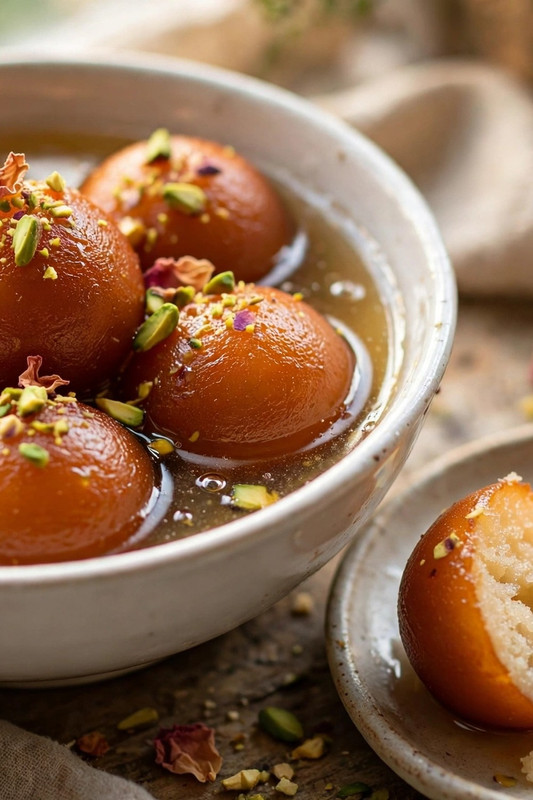
Soft, warm and soaked in fragrant syrup — gulab jamun is the sweet that appears at every wedding, Eid table and tea party in Pakistan. The good ones melt in the mouth. The bad ones are hard in the middle, and almost everyone has bitten into one of those at least once.
A baking lover from Pakistan shares a simple home version made with milk powder, so no khoya is needed. The secret is not a long ingredient list — it is a soft dough, gentle frying, and a patient soak. Follow those three things and the jamun come out soft all the way through, every time.
Watch it in 30 seconds:
What Is Gulab Jamun?
Gulab jamun are small milk-based balls, fried slowly until deep golden, then soaked in a warm sugar syrup scented with cardamom and rose water. "Gulab" refers to the rose-scented syrup, and "jamun" to the dark purple fruit the balls resemble in size and colour. Shops traditionally make them from khoya (reduced milk solids), but full-cream milk powder gives the same soft result at home with far less work.
Ingredients You Need
For the jamun:
• 1 cup (100g) full-cream milk powder
• 1/4 cup (30g) all-purpose flour
• 1/4 teaspoon baking soda
• 1/4 teaspoon cardamom powder
• 1 tablespoon melted ghee, plus more for greasing your palms
• 4–5 tablespoons warm milk, added a little at a time
• Ghee or oil, for deep frying
For the syrup:
• 1 1/2 cups (300g) sugar
• 1 1/2 cups (360ml) water
• 4–5 green cardamom pods, lightly crushed
• 1 teaspoon rose water
• 1 teaspoon lemon juice (stops the syrup from crystallising)
• Chopped pistachios, to serve (optional)
This makes about 12–14 medium jamun.
Step 1: Make the Syrup First
Put the sugar, water and cardamom pods in a wide pan and bring to a boil, stirring until the sugar dissolves. Simmer for 4–5 minutes — the syrup should feel slightly sticky between your fingers, but it does not need a thread. Add the lemon juice and rose water, cover, and keep the pan warm on the lowest heat. The syrup must be warm, not boiling, when the fried jamun go in.
Step 2: Mix a Soft Dough
In a bowl, mix the milk powder, flour, baking soda and cardamom powder. Rub in the melted ghee with your fingertips. Now add warm milk one tablespoon at a time, gathering the mixture gently until it just comes together into a soft, slightly sticky dough.
This is the step that decides everything: the dough must stay soft. A stiff dough makes hard jamun. Do not knead hard or for long — 30 seconds of gentle mixing is enough. Cover and rest the dough for 10 minutes; it will firm up a little as the milk powder absorbs the milk.
Step 3: Roll Crack-Free Balls
Grease your palms with a little ghee. Take small portions of dough and roll them into smooth balls about the size of a walnut — they will double in size after frying and soaking. If the surface shows cracks, wet your palm with a drop of milk and roll again. Cracks on the surface become cracks in the fryer, so take your time here. Keep the balls covered with a damp cloth while you work.
Step 4: Fry Low and Slow
Heat ghee or oil in a karahi or deep pan on low-medium heat. The oil should be warm, never smoking — test with a tiny piece of dough; it should rise slowly with small bubbles, not sizzle hard. Slide in a few balls at a time and keep stirring the oil gently in circles so the jamun roll and colour evenly.
Fry for 5–6 minutes until they turn a deep golden brown. They will look a shade darker than you expect — that is correct, because the syrup lightens them. Drain on a plate for one minute.
Step 5: The Patient Soak
Drop the warm jamun straight into the warm syrup. Cover and leave for at least 1–2 hours; overnight is even better. The balls drink in the syrup, swell and become soft right to the centre. Serve warm, with a spoonful of syrup and a pinch of pistachios on top.
Make Them Extra Special: Stuffed Jamun
For guests, try this: lift the soaked jamun out of the syrup, cut each one in half from the middle, and fill it with a little khoya. No khoya at home? A spoon of thick malai cream works beautifully — and costs less. Press the halves gently back together, set a few slivers of almond (badam) on top, and serve. The jamun look decorative on the plate, taste richer, and everyone asks how you made them.
Why Jamun Turn Hard — and How to Fix It
Hard centre: the dough was too dry or had too much flour. Add milk a spoon at a time until the dough is soft and slightly sticky.
Cracks while frying: the balls were rolled dry. Grease your palms with ghee and roll until the surface is completely smooth.
Brown outside, raw inside: the oil was too hot. Gulab jamun fry on patience — low heat, slow colour.
Shrivelled after soaking: the syrup was boiling or too thick. It should be warm and light, never a heavy one-thread syrup.
Soft, syrup-soaked gulab jamun, ready to serve.
A Serious Note: Buy Milk Powder and Khoya From Trusted Shops Only
Watch: the detergent trick in 30 seconds:
Let this be clear first: this homemade recipe uses only clean, simple ingredients — no chemicals of any kind. The note below is about a harmful practice found in some markets, shared so you can protect your family from it.
 |
| Detergent is mixed into fake milk in some markets only to create foam like this. The homemade recipe above uses none of this — only clean ingredients from a trusted shop. |
Not every milk powder or market khoya is what it claims to be. Sadly, adulteration is common: some sellers prepare synthetic milk and khoya using harmful chemicals — even detergent, added just to create fake foam — along with other substances that do not belong in food. Such milk and khoya are dangerous for health, especially for children. Protect your family: buy milk powder and khoya only from a trusted shop, prefer sealed packs from known brands, and avoid loose milk products that look unnaturally white or smell of chemicals. Honest ingredients are the first step of every good recipe.
How to Store
Keep the jamun in their syrup in the fridge for up to a week. Warm them gently before serving — 15 seconds in the microwave brings back the just-made softness.
More Favourites From the Blog
If you enjoyed this, try these next: Crispy Butter Cookies for something sweet with your chai, and Soft Milk Bread for a fresh homemade loaf.
Want to keep this recipe in the kitchen? The printable recipe cards from Baking With Kashf are made for exactly that — write the recipe down once and keep it handy.
Make these once for a family dinner, and watch them disappear before the tea even arrives. Soft gulab jamun are not shop magic — they are just a soft dough, slow frying and a little patience.
Coming Next on Baking With Kashf
Next up: soft, spongy Rasgulla — made from fresh homemade paneer, with the gentle tricks that keep every ball round, juicy and melt-in-the-mouth. It is coming to the blog very soon — do check back!


Comments
Post a Comment