Melt-in-Mouth Barfi — Khoya, Badam, Pista & Fruit (Bakery Secrets)
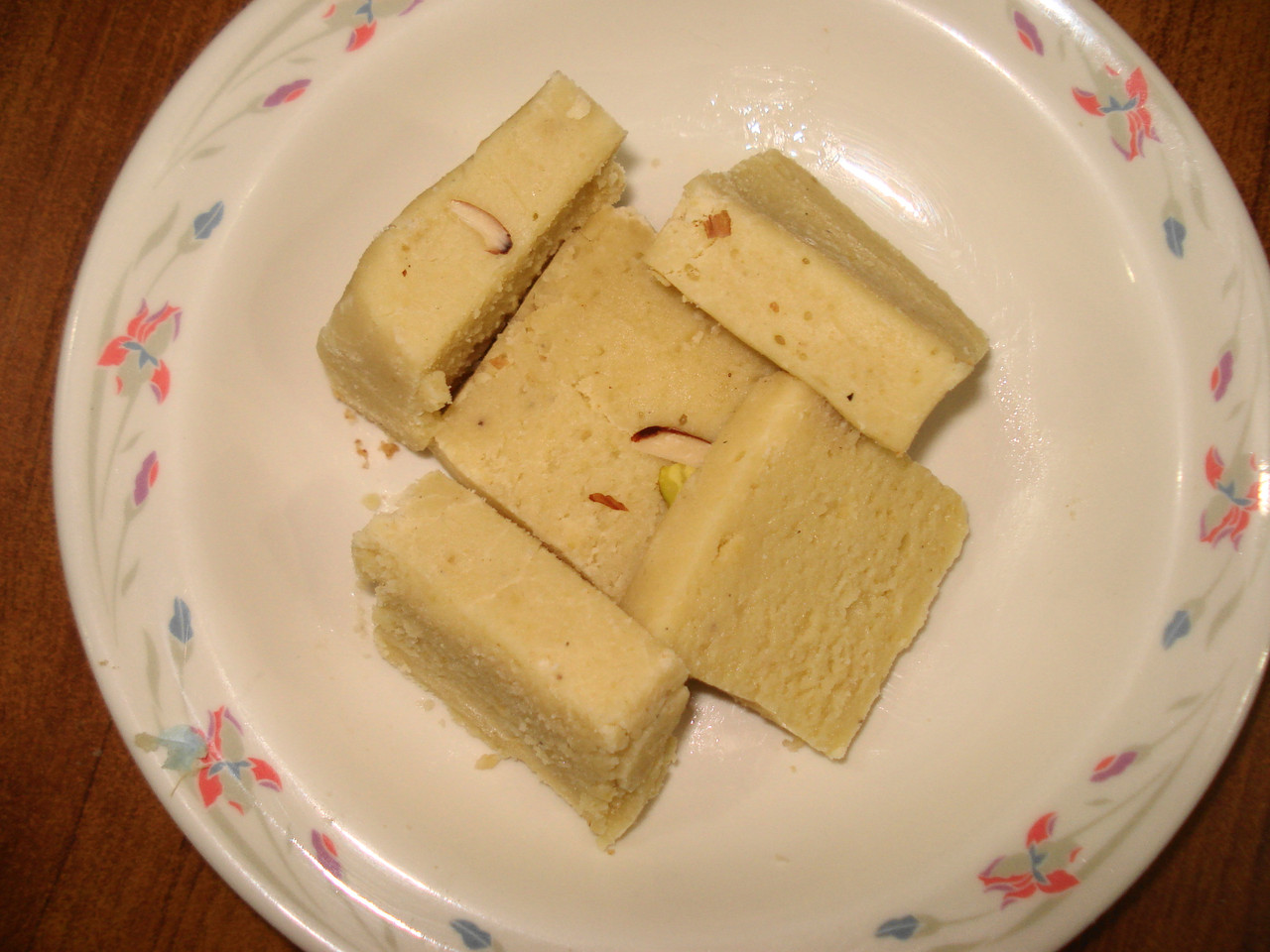
Photo: Miansari66, Wikimedia Commons (Public domain)
Soft, creamy and melt-in-the-mouth — a good barfi is the sweet that shows up at every celebration, from Eid to weddings to a simple family dinner. It looks like a shop sweet, but the homemade version needs only a few simple ingredients and one pan.
This recipe follows the method real home cooks demonstrate in their kitchens: full-cream milk powder whisked into milk first, then cooked on low heat with ghee until it thickens. The secret is low heat, constant stirring, and knowing exactly when to take the pan off the stove. Get those three things right, and the barfi sets soft and smooth every time. You will also find the traditional khoya (mawa) method below — plus easy tips for badam barfi, pista barfi and colourful fruit barfi, all from the same base.
Watch it being made:
What Is Barfi?
Barfi is a soft milk sweet, cut into squares or diamonds, and usually topped with pistachios, almonds or silver leaf. The classic plain barfi is made from milk solids and sugar, cooked together until thick, then set in a tray and cut once cool. It is rich but not heavy, and it keeps well for days — which is why it is the first sweet many families make for guests.
Ingredients You Need (Milk Powder Barfi)
• 2½ cups (250g) full-cream milk powder
• ¾ cup (150g) sugar
• 1 cup (240ml) milk
• ¼ cup (60g) ghee
• ½ teaspoon cardamom powder
• 2 tablespoons chopped pistachios, to top
• Silver leaf (optional, for decoration)
This makes about 16 medium squares.
Step 1: Prepare the Tray
Grease a small tray or plate with a little ghee and line it with butter paper if you have it. This step takes one minute and saves a lot of trouble later — set barfi sticks to an ungreased tray, and the first piece always breaks. Keep the tray ready before you start cooking, because the mixture thickens fast at the end.
Step 2: Whisk Everything First
In a bowl, whisk the milk powder, sugar and milk together until smooth and lump-free. This one step, done before any heat, is what keeps the barfi silky instead of grainy. Pour the mixture into a heavy, non-stick pan, add the ghee, and put it on low heat.
Step 3: Cook Low and Keep Stirring
Stir continuously on low heat. At first the mixture will look loose and milky. After about 10 minutes it will thicken, start to hold its shape, and pull away from the sides of the pan as one soft mass. Stir in the cardamom powder.
This is the most important moment: as soon as the mixture leaves the sides of the pan and forms one soft mass, take it off the heat. Cooking it longer makes hard, dry barfi. Cooking it less makes barfi that stays chewy and never sets properly.
Step 4: Set, Cool and Cut
Transfer the mixture into the greased tray at once and smooth the top with a greased spoon or spatula. Sprinkle the chopped pistachios on top and press them in very lightly. If using silver leaf, lay it on now, while the surface is still warm.
Let the barfi set at room temperature for about 2 hours, until fully firm — or 1 hour in the fridge if you are in a hurry. Once set, cut into squares or diamonds with a sharp, lightly greased knife.
The Traditional Way — Khoya (Mawa) Barfi
Before milk powder, barfi was always made with khoya — milk slowly reduced to a solid. It takes longer, but the taste is deeper and slightly grainy in the best way. Bakers use this ratio:500g khoya to 200g sugar.
Crumble or grate the khoya and roast it in a heavy pan on low heat for 5–7 minutes, stirring all the time, until it softens and smells sweet. Add the sugar — the mixture will loosen first, then thicken again. Keep cooking and stirring for about 15–20 minutes in total, until it leaves the sides of the pan and holds together. Stir in ½ teaspoon cardamom, spread it about 2cm thick in a greased tray (a 6×8 inch tray is just right), top with silver leaf and pistachios, let it set for 1–2 hours at room temperature, and cut. You should get about 20 pieces.
Baker's tip:1 teaspoon of liquid glucose cooked with the khoya keeps the barfi soft and stops it turning grainy — this is the quiet trick behind many shop barfis. And never cook khoya on high heat; it catches and turns bitter fast.
From Our Bakery — How Barfi Is Really Made
Recipes online will give you a dozen methods, but this is how barfi is made where I work, in a working bakery, batch after batch. Our barfi starts the traditional way — withkhoya and sugar, nothing else— cooked down until it holds together, exactly like the khoya method above. No milk powder, no shortcuts: khoya is the flavour, and there is no substitute for it at bakery scale.
Forbadam barfi, we addkhasta badam— crisp, crunchy almonds — and the variety matters: we useAmerican almonds, because their taste is clean and sweet and they stay crisp in the mixture. Almond barfi made this way is a littlesofterthan plain barfi, and that softness is correct — do not cook it longer trying to make it hard, or you will lose the almond flavour.
Ourfruit barfihides a baker's secret: along with the almonds, we fold ingajar murabba— preserved carrot murabba, chopped fine. It gives the barfi a gentle sweetness, a little chew, and a beautiful colour inside every square, without any artificial colour at all. Andpista barfiis made the same way, with ground pistachio worked into the same khoya base — once you have the base right, the whole family of barfis is yours.
3 Easy Variations — Badam, Pista and Fruit Barfi
Once the plain barfi is in your hands, these three take almost no extra work:
Badam Barfi (almond):Soak ½ cup almonds in hot water for 30 minutes, peel them, let them dry fully, then grind to a powder in short pulses — if you grind too long, the almonds release oil and turn into paste. Make a one-string sugar syrup (1 cup sugar + ¼ cup water), add the almond powder with 2 tablespoons of milk powder, and stir on low heat for 5–6 minutes until it leaves the pan. Set and cut the same way. Short on time? Simply fold ½ cup almond powder into the milk-powder mixture above just before setting — the flavour still comes through beautifully. Bakery note: crisp American almonds are the tastiest choice for badam barfi, and the finished barfi should stay a little soft — that is how it is meant to be.
Pista Barfi (pistachio):Use the same syrup method with ½ cup finely ground pistachios (plus ½ cup almond powder if you like the classic pista-badam pair). Real pistachios give the barfi its own soft green colour — the 2 drops of green food colour in many recipes are only for looks, and the barfi tastes exactly the same without them. Top with extra chopped pista so everyone can see what is inside.
Fruit Barfi (tutti frutti):The children's favourite. Make the syrup base with milk powder (3 cups milk powder + 1 cup sugar + ¾ cup water, boiled to one-string, with ½ cup ghee and 1 teaspoon vanilla), fold in ¼ cup tutti frutti, spread, and press more tutti frutti on top. Rest 1 hour and cut — every slice comes out speckled red, green and yellow. No tutti frutti at home? Finely chopped raisins, cherries and mixed dry fruits folded into the plain mixture give a rich dry-fruit barfi the same way. And here is the baker's version: fold finely chopped gajar murabba(carrot preserve) in with some almonds — the murabba melts into the barfi with a soft chew and natural colour. Highly recommended.
Myth vs Fact — The Chemical Barfi Problem
Cheap bazaar barfi has a bad name, and some of it is earned: when milk prices rise, a share of the khoya in the market is not khoya at all. Knowing the difference protects your family — and it is exactly why homemade barfi matters.
Myth:"Very white, very cheap barfi is pure and fresh."
Fact:Unnatural whiteness at a very low price is a warning sign, not a promise. Khoya made by stretching milk solids with starch, skimmed-milk powder and vegetable fat (vanaspati) looks pale and perfect — and costs far less than real khoya, because real khoya needs litres of full-cream milk for every kilo.
Myth:"If it tastes sweet, it must be fine."
Fact:Sugar and cardamom hide almost everything. Synthetic khoya is usually caught by texture, not taste: it feels rubbery or chewy instead of soft and slightly grainy, and it can smell faintly of oil or chemicals instead of warm milk. Real khoya barfi melts; fake khoya barfi bounces.
Myth:"There is no way to test sweets at home."
Fact:There is one simple test for the most common filler — starch. Dissolve a pea-sized piece of the sweet in a little warm water, let it cool, and add a drop of iodine tincture (the brown antiseptic in most home medicine boxes). If it turns blue-black, starch is present. Pure milk khoya does not turn blue.
The honest answer is the one this blog always gives: buy khoya and barfi only from a shop you trust, be suspicious of prices that cannot cover the milk, and when it matters — make it at home. Nothing in the recipes above can hide in a chemical, because you put every ingredient in yourself.
Why Barfi Goes Wrong — and How to Fix It
Hard, dry barfi:it was cooked too long after thickening. Take the pan off the heat the moment the mixture leaves the sides.
Chewy barfi that never quite sets:it was taken off too early, while still loose. Cook until it holds together as one soft mass that leaves the pan clean.
Lumpy texture:the milk powder went in dry, or the stirring stopped. Whisk the powder into the milk first, and stir without a break.
Grainy feel:the sugar did not fully dissolve, or khoya was cooked on high heat. Low flame and full dissolving fix it.
Brown colour:the heat was too high. Milk solids brown fast — keep the flame low from start to finish.
How to Store
Keep the barfi in an airtight box at room temperature for 4–5 days, or in the fridge for up to 2 weeks. Nut barfis (badam, pista) keep even longer. Bring fridge-cold barfi to room temperature for 20 minutes before serving.
More Favourites From the Blog
If you enjoyed this, try these next: Crispy Butter Cookies for something sweet with your chai, and Soft Milk Bread for a fresh homemade loaf.
Want to keep this recipe in the kitchen? The printable recipe cards from Baking With Kashf are made for exactly that — write the recipe down once and keep it handy.
Soft barfi is not shop magic — it is just milk solids, low heat and a little patience.
Coming Next on Baking With Kashf
Next up: Khoya or Paneer? — a simple guide to telling the real thing from the fake before you buy, so your sweets are always made with honest ingredients. Do check back!


Comments
Post a Comment