Eggy Sponge Cake? 5 Easy Fixes From Our Bakery Counter

You take the sponge out of the oven, and the first thing you smell is egg. Not vanilla, not butter — egg. Your first thought is that something went wrong. I am Kashf, and I work with sponge cakes every single day at our bakery counter. Let me tell you the truth first, before any fix: an egg smell in sponge is not a fault, because sponge is made with egg. A sponge cake has no butter and almost no oil — the egg is what lifts it, holds it and gives it its soft crumb. So a little egg smell, especially when the cake is still warm, is the cake being honest about what it is made of. The problem is only when the smell is strong enough to put you off eating it. That is the part we can fix — and most of the fixes happen before the cake ever goes into the oven.
Print this article — keep it in the kitchen for your next sponge.
Watch the 50-second Short: Eggy Sponge Cake? 5 Easy Fixes from our bakery counter.
Why Does Sponge Smell of Egg?
Eggs carry sulphur compounds — the same ones that give a hard-boiled egg its smell. When eggs are heated, those compounds release, and in a light sponge there is very little butter, cream or spice to hide behind. So the smell shows itself more in sponge than in a rich butter cake. That is the simple science, and every home-baking guide agrees on it.
But the smell gets stronger for five clear reasons, and each one has a fix:
1. The eggs were not beaten enough. This is the most common reason. If the eggs are not beaten until they are thick, pale and full of air, the egg protein stays partly unworked, and the baked cake smells eggy. The fix is time: whisk the eggs and sugar on high speed for seven to eight minutes, until the mixture is thick, pale and falls in ribbons. The more air you beat in, the less eggy the cake smells after baking.
2. The chalaza — the "eye" of the egg — was left in. Every egg has a white, string-like cord near the yolk. It holds the yolk in place, and it is the part that smells most strongly of egg. Home bakers who remove it say it is the single biggest difference. Lift it out with a fork or a spoon before you beat the eggs.
3. The eggs were cold. Cold eggs do not blend smoothly, and a dense, uneven batter traps more egg smell. Use room-temperature eggs. If you forgot to take them out, put them in a bowl of warm water for ten minutes — that brings them to room temperature without cooking them.
4. The cake was overbaked. The longer eggs cook, the more sulphur they release. An overbaked sponge smells more eggy and tastes drier too. Use an oven thermometer if you have one, and set a timer — judge by a clean toothpick and a springy top, not by extra minutes "just to be safe".
5. There was nothing to balance the egg. A sponge with no flavouring has nothing to soften the egg smell. A little vanilla essence, lemon zest or orange zest gives the nose something else to follow. The home rule is simple: about one teaspoon of flavouring per egg.
5 Fixes From Our Bakery Counter
Here is the short list I work by — in the order that matters most:
Beat longer. Seven to eight minutes on high, until the eggs are thick, pale and ribbon-like. This one fix alone softens the smell more than anything else.
Remove the eye. Take out the chalaza from every egg before beating. It takes seconds, and it is the most direct way to cut the eggy smell.
Warm the eggs. Room temperature, or ten minutes in warm water. Warm eggs whip up lighter, and a lighter batter smells less eggy.
Add a flavour friend. Vanilla essence is the classic, but lemon zest, orange zest or a pinch of cardamom all work. Fruit syrups can even colour with flavour — kiwi syrup gives a soft green — so the flavour and the look work together.
Do not overbake, and cool it right. Bake only until done, cool the sponge on a wire rack, and do not leave a warm egg cake sitting in open air longer than needed — home bakers find the smell settles into the cake when it cools in moving air. Let the smell fade as the cake cools: in many cases, if the cake tastes fine, the eggy smell fades on its own as the flavours settle.
How to Store Your Sponge
A plain sponge keeps well if you keep the air out. At room temperature, in an airtight box, it stays fresh for 2–3 days. In the fridge, wrapped well, it keeps for 5–7 days — bring it back to room temperature before serving, or it will taste dry. In the freezer, wrapped in plastic and then foil, it keeps for 2–3 months. A sponge with fresh cream or fruit filling is different: that one must go in the fridge and be eaten within 1–2 days.
If the Cake Is Already Baked
Sometimes the cake is already out of the oven and the smell is already there. You cannot take the eggs out of a baked cake, but you can still save it. Brush the sponge with a lightly flavoured sugar syrup — vanilla or citrus — which adds moisture and gently covers the egg flavour. At our bakery counter we do the same job with milk: a sponge that is made ahead and kept aside goes firm as it cools, so when we build the cake we brush milk over it — the sponge drinks it in and turns soft again before the cream goes on. A generous layer of buttercream or ganache helps too, because richer toppings mellow stronger tastes. Or fill the cake with fruit, jam or curd, which brings freshness and sweetness and shifts the focus away from the eggs. A dusting of powdered sugar or a drizzle of lemon glaze does the same job in a lighter way.
And here is a bakery way of thinking about it: make the cake tell its own flavour. A wide, flat cake with fewer, thinner cream layers and a juicier sponge is tastier than a tall, heavily creamed one — the sponge itself does the talking. My own favourite is a half-and-half cake: one half vanilla, one half chocolate mousse, fully cream outside, with red velvet sponge crumbs on the vanilla side and brownie crumbs on the chocolate side, so the cake itself tells you which side is which flavour. When the flavour is that clear, nobody is thinking about the egg.
Common Mistakes — and the Fix for Each
Every line below comes from the home recipes and bakery practice in this article — nothing here is guessed.
| Mistake | What happens | The fix |
|---|---|---|
| Eggs not checked | One bad egg — one that has gone off inside — ruins the whole sponge; the full batch is lost. | Check every egg before it goes in: crack each one into a small cup, look and smell, then add it. Never crack eggs straight into the batter. |
| Eggs beaten too little | Protein stays unworked; the baked sponge smells strongly of egg. | Whisk eggs + sugar 7–8 minutes on high, until thick, pale and ribbon-like. |
| Chalaza left in | The "eye" of the egg is the strongest-smelling part. | Lift it out with a fork before beating, every egg. |
| Cold eggs | Dense, uneven batter that traps the egg smell. | Room-temperature eggs, or 10 minutes in warm water. |
| Overbaking | More sulphur released; dry sponge, stronger smell. | Oven thermometer + timer; bake only until a toothpick comes out clean. |
| No flavouring | Nothing to balance the egg, so the egg smell leads. | Vanilla essence or citrus zest — about 1 teaspoon per egg. |
| Cutting the eggs down | Sponge collapses — eggs are its structure, not an extra. | Do not reduce the eggs. Mask and balance the smell instead. |
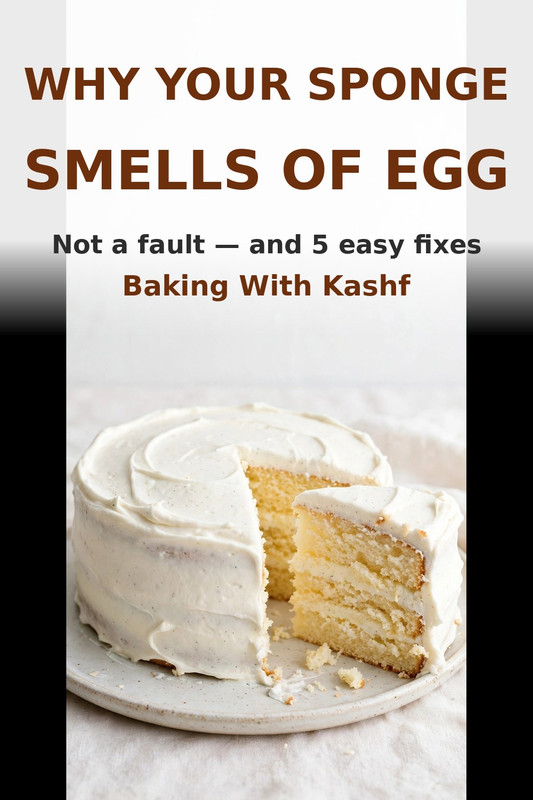
Save this sponge cake tip on Pinterest for later.
Frequently Asked Questions
Does an egg smell mean my sponge is spoiled?
No. A sponge is made with egg, so a light egg smell — especially while it is still warm — is normal, not a sign of spoilage. If the eggs were fresh and the cake tastes fine, the smell is just the egg doing its job. It usually fades as the cake cools.
Should I use fewer eggs next time?
No — do not reduce the eggs. A sponge has no butter or oil to hold it up; the eggs are its structure. Fewer eggs gives you a flat, dense cake. Fix the smell with longer beating, the chalaza removed and a little flavouring, not with fewer eggs.
Does vanilla essence really help?
Yes. Vanilla is the classic fix because it gives the nose a sweeter, stronger scent to follow, and it adds flavour at the same time. Lemon zest, orange zest and cardamom work the same way. About one teaspoon of flavouring per egg is the home rule.
Can I fix a cake that already smells eggy?
Yes. Brush it with a vanilla or citrus sugar syrup, add a generous layer of buttercream or ganache, or fill it with fruit, jam or curd. The flavour and the moisture both soften the egg smell, and the cake is still good to eat.
Myth vs Fact
Myth: "If a sponge smells of egg, the eggs were bad."
Fact: fresh eggs smell of egg too. The smell comes from sulphur compounds that all eggs carry, and it shows up most in sponge because there is so little butter or spice to hide it. Bad eggs smell rotten and sour — that is a different smell entirely, and you would know it before baking.
Myth: "Use fewer eggs and the smell goes away."
Fact: fewer eggs only gives you a flat sponge. The eggs are the structure. Beat them properly, remove the chalaza, and add flavouring — the smell softens and the cake still rises.
Myth: "Washing the eggs removes the smell."
Fact: washing the shell does nothing to the smell inside the egg. The smell comes from the egg itself, not the shell. Beat, flavour and bake right — that is the fix.
From Our Bakery to Your Kitchen
A sponge that smells a little of egg is not a failure — it is a sponge. The fix is not to fight the egg, but to give it good company: a long, pale beat, warm eggs, the eye removed, a spoon of vanilla, and a bake that stops on time. Try it on your next sponge — our soft and fluffy cake shows the same gentle method step by step, and if you like small bakes, our crispy butter cookies are the easiest place to practise it. And if measuring is where things slip, the Baking Conversion Charts keep your eggs, flour and sugar in the right balance — half the fix is getting the measures right.
More From Our Bakery Counter
 How to Make a Soft and Fluffy Cake at Home |
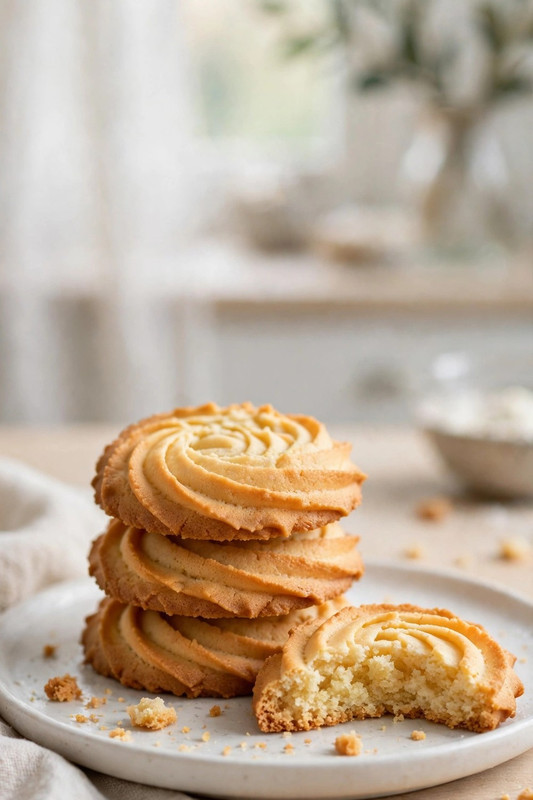 How to Make Crispy Butter Cookies at Home |
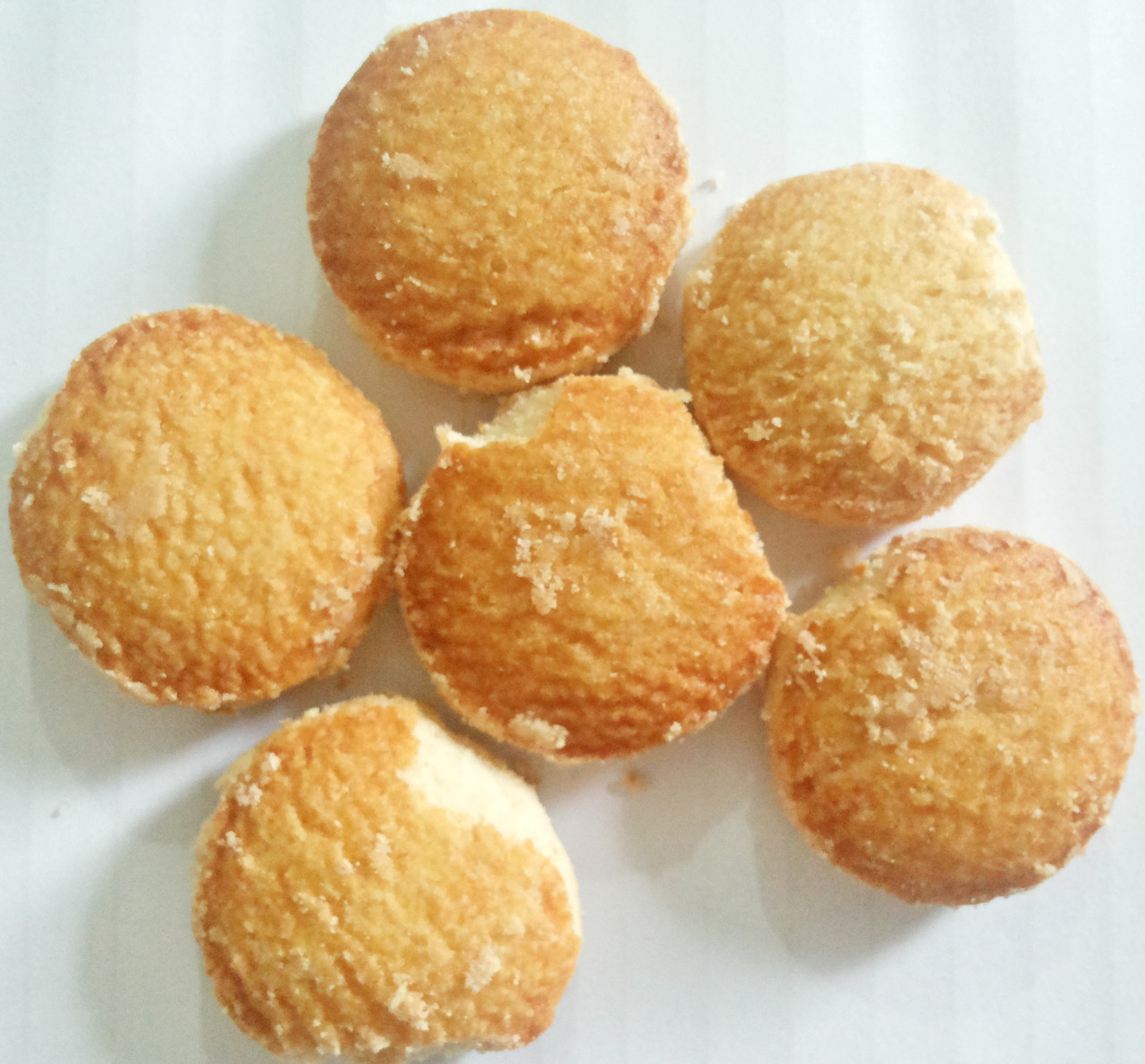 Nan Khatai Recipe — Bakery-Style Almond Shortbread |
Coming Next on Baking With Kashf
Our next post is now live: Pista Sweet Recipe | Our Bakery's Winter Pista Sweet, Step by Step — our bakery's winter pista sweet, step by step. Stay with us.
About the Author
I am Kashf — sharing the secret recipes of a branch of one of Pakistan's famous bakeries. Every recipe here is tested at our bakery counter and in my own kitchen.
Never Miss a Recipe
Get our free Mithai Rescue Chart and never miss a recipe from our bakery counter.


Comments
Post a Comment