Pista Sweet Recipe | Our Bakery's Winter Pista Sweet, Step by Step
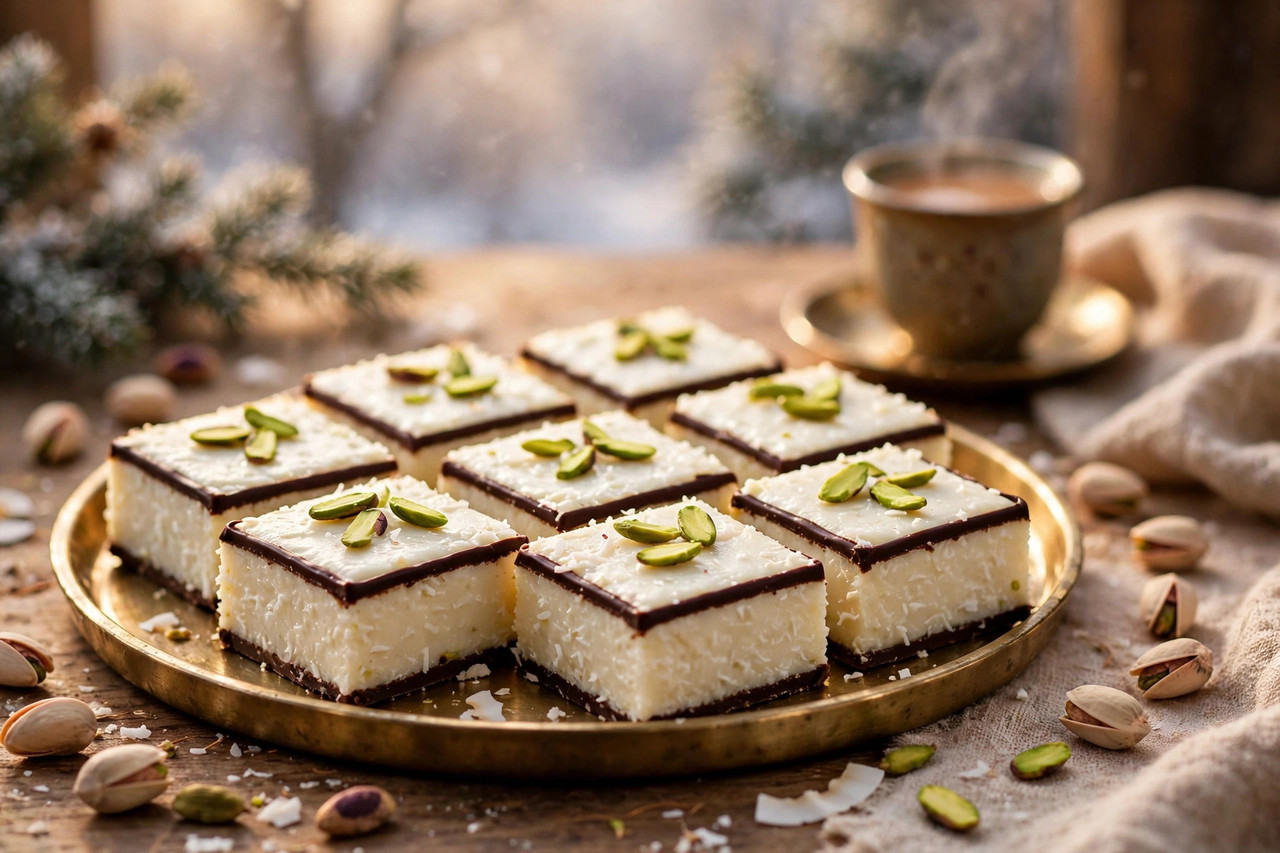
Winter is here, and at our bakery counter the winter sweets are back on the tray. One of them is Pista Sweet — soft coconut-khoya squares with pista running through them, and, if you want it, a thin chocolate slab sitting on the border of every piece. I am Kashf, and this is our own bakery's pista sweet, made from our karigar's 1-kg estimate sheet. It is a guide as much as a recipe: what this sweet is, why it tastes the way it does, and how to make it at home without any fuss.
Print this article — keep it in the kitchen for your next winter sweet.
Recipe at a Glance
| Prep time | Cook time | Total time | Yield |
|---|---|---|---|
| 10 minutes | 20–25 minutes | About 30 minutes, plus 1–2 hours to set | About 1 kg — around 20 pieces |
What Is Pista Sweet?
Pista Sweet is a coconut barfi from the pista family — the same family as our barfi, but with its own identity. The base is wet coconut and khoya, cooked down with sugar until the mass leaves the pan. Pista is folded through it, so the green runs inside the sweet, not just on top. It is cut into rectangles, not rolls — the tray-set method suits it, and the rectangle is what lets the chocolate border sit neatly on every piece.
It is a winter sweet. Coconut and khoya keep their best in cool weather, and this is the sweet our counter makes when the cold sets in. In summer heat it is a fridge sweet — never leave it sitting out in the heat.
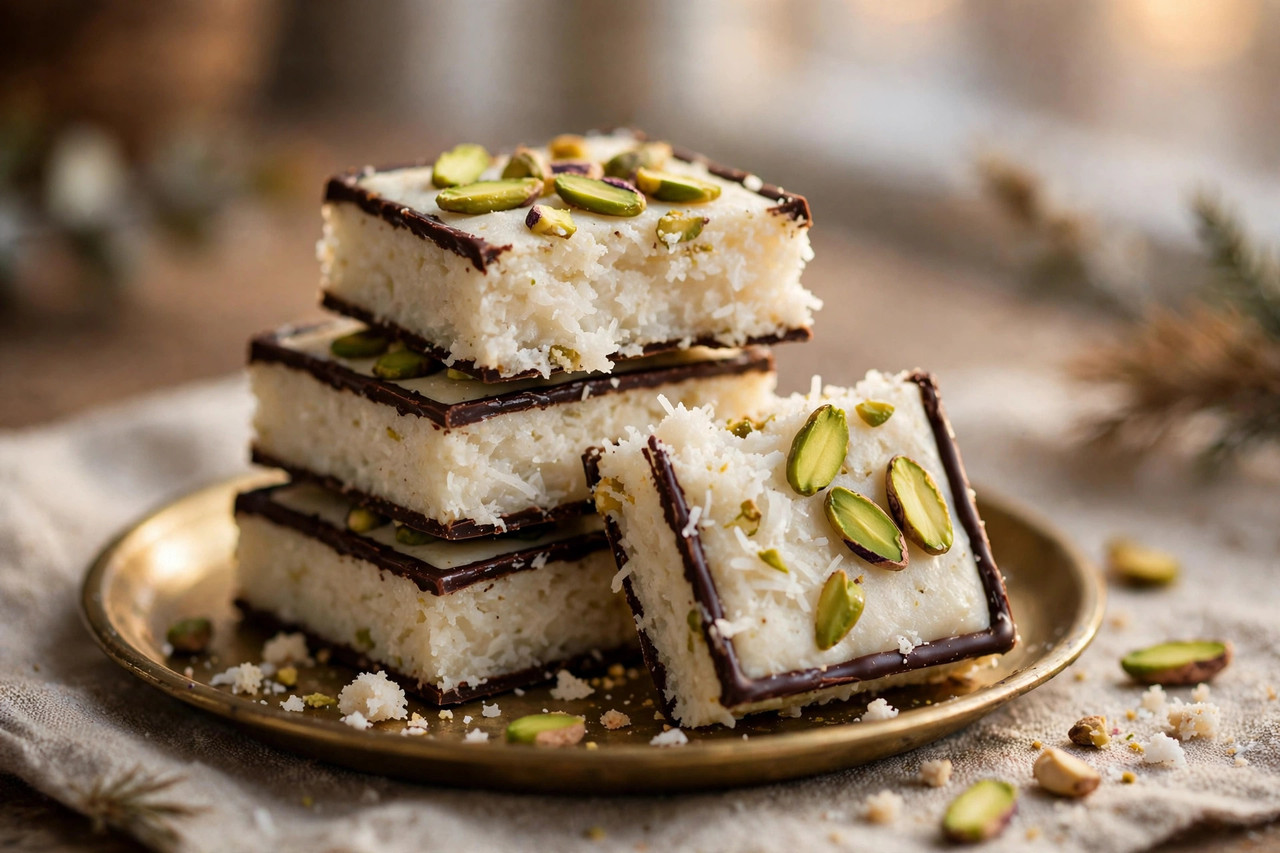
Stacked pista sweet squares — the chocolate border on every piece, and the soft coconut inside.
Our Bakery's 1-kg Sheet
This is the karigar's own estimate sheet for one kilo, exactly as it came to us — with Kashf's own additions added in. The sheet's raw total is about 1.03 kg, and it cooks down to about 1 kg of sweet.
| Item | For 1 kg |
|---|---|
| Sugar | 286 g |
| Wet coconut, crushed | 286 g |
| Liquid glucose | 48 g |
| Butter | 95 g |
| Polac condensed milk | 48 g |
| Khoya | 95 g |
| Pista | 28.6 g |
| Honey | 47.6 g |
| Fresh milk OR dry milk | A little — Kashf's addition |
| Icing sugar | To taste — Kashf's addition |
| Chocolate powder (cocoa) | To taste, for the border slab — Kashf's addition |
Two honest notes about this sheet. First, the chocolate slab and the icing sugar have no fixed quantity on purpose — Kashf's word is that the slab is izaafi, an extra for taste, "jo jitna b dalay" — as much as you like. Second, the sheet lists no food colour and no elaichi. The 28.6 g of pista alone gives only a pale green. The deep shop green comes from a pinch of green food colour — optional, by your own choice, exactly as Kashf said.
Watch the Short: Pista Sweet Recipe | Our Bakery's Winter Pista Sweet, Step by Step from our bakery counter.
The Recipe — Home Half-Batch
At home, make half the sheet. The quantities below are exactly half of the 1-kg sheet, so the sweet comes out the same.
Ingredients (half-batch, about 500 g): sugar 143 g (about ¾ cup) · wet coconut, crushed 143 g (about 1½ cups, loosely packed) · liquid glucose 24 g (about 1 tablespoon) · butter 48 g (about 3½ tablespoons) · Polac condensed milk 24 g (about 1½ tablespoons) · khoya 48 g, crumbled (about 3 tablespoons) · pista 14 g, chopped (about 1 tablespoon) · honey 24 g (about 1 tablespoon) · fresh milk, a splash (2–3 tablespoons) OR dry milk, added with the khoya · icing sugar 1–2 tablespoons, to taste · chocolate powder, to taste, for the optional border slab.
Method:
1. Butter and coconut first. Melt the butter in a heavy karahi on medium-low heat. Add the wet crushed coconut and bhuno for 4–6 minutes, stirring, until its own water steams off and a light coconut smell comes. Do not brown it. Wet coconut carries water — skipping this drying is what makes the sweet soggy and short-lived.
2. A splash of milk. Add the fresh milk now, just enough to cook the coconut soft. If you are using dry milk instead, leave it out here — it goes in at step 4 with the khoya.
3. Sugars in. Add the sugar, honey and liquid glucose. Stir until the sugar fully melts into a syrup around the coconut — no dry sugar left. The glucose and honey start their work here: they stop the sugar crystallising later, so the set stays soft and slightly chewy instead of grainy and hard. It is the same glucose-with-khoya trick that keeps our barfi soft.
4. Milk solids in. Add the condensed milk and the crumbled khoya (plus the dry milk here, if that is your route). Keep the heat low-to-medium and stir without stopping for 10–15 minutes. The mass thickens, comes together into one lump and starts leaving the sides of the karahi, with butter showing at the edges. That "leaves the pan" moment is the doneness test every source agrees on: take it off there. Longer makes it hard and dry; shorter and it will never set.
5. Icing sugar at the end. Stir the icing sugar in near the end, off the main heat. Powdered sugar melts in without grain and gives the smooth shop set.
6. The chocolate border slab — Kashf's own tip. This is the part that makes this sweet ours. Chocolate powder is added with icing sugar, made into a chocolate slab, and that slab goes on the border of every piece. To make the slab: sift icing sugar and cocoa powder together, bind with a little melted butter and a touch of honey or glucose, roll it out thin, chill it for about 10 minutes until firm, then cut it into thin strips while it is cold. Lay a strip on the border of each piece. The slab is optional — the sweet is complete without it — but when it is there, every piece carries a little chocolate at the edge. All the binders the slab needs are already on the sheet, so nothing extra is bought for it.
7. Pista through, then set. Fold most of the chopped pista through the hot mass, then tip it into a greased tray and press it level with a greased spatula, about 2 cm thick. Scatter the sliced pista on top and press lightly so it sticks.
8. Cut. Let it set at room temperature for 1–2 hours (or 30–45 minutes in the fridge). Cut into squares or rectangles once just set, and let it cool completely before packing.
What Each Ingredient Does
| Ingredient | Its job in this sweet |
|---|---|
| Wet coconut | The body — soft chew and the coconut flavour; must be dried first, or the sweet turns soggy. |
| Khoya + condensed milk | The milk solids — richness, softness and the mithai taste; the khoya is what makes it a barfi, not a candy. |
| Sugar | Sweetness and the set — too much, and it crystallises grainy. |
| Liquid glucose + honey | The halwai "doctors" — they stop the sugar crystallising, so the set stays soft and slightly chewy. |
| Butter | Richness, and it helps the sweet release from the pan and the tray. |
| Pista | Flavour and the pale green identity — folded through, not just on top. |
| Fresh milk or dry milk | Softens the coconut while it cooks; dry milk also adds milk solids with the khoya. |
| Icing sugar | A smooth finish — melts in without grain at the end. |
| Chocolate powder | Optional — the border slab, for taste only, on the edge of every piece. |
The Green Colour Question
If your pista sweet comes out pale, do not worry — that is the honest colour. The 28.6 g of pista in a kilo gives a pale green, not the deep green of the shop tray. Shop versions get their strong green from ground pista in bulk and a few drops of green food colour. Kashf's word on this is simple: food colour is optional, by your own choice — green is the colour used when colour is chosen. Use it if you want the shop look; leave it out if you want the natural white-cream sweet. Either way, the taste is the same.
How to Store It
Because it has wet coconut and khoya, treat this sweet as perishable. In cool weather, an airtight box at room temperature keeps it for a few days. In the fridge it keeps for 1–2 weeks. In heat, fridge only — never leave it sitting out on a hot day. Let it come to room temperature for a few minutes before serving, so it is soft again.
Common Mistakes — and the Fix for Each
Every line below comes from the method and the sources in this article — nothing here is guessed.
| Mistake | What happens | The fix |
|---|---|---|
| Coconut not dried first | Wet coconut makes the sweet soggy and short-lived. | Bhuno the wet coconut 4–6 minutes until its water steams off, before the sugar goes in. |
| Cooked past the pan-leaving stage | The set turns hard and dry. | Take it off the heat the moment the mass leaves the karahi sides. |
| Taken off too early | The sweet never sets; it stays soft and sticky. | Stir non-stop 10–15 minutes until the mass comes together into one lump. |
| Sugar crystallised, grainy set | Grainy, hard squares instead of a soft chew. | Do not skip the glucose and honey — they are what keep the set soft. |
| Left out in the heat | Wet coconut + khoya spoil fast in warm weather. | Fridge only in heat; room temperature only for a few days in cool weather. |
| Expecting deep green from pista alone | Pale sweet, and the feeling that something went wrong. | Nothing went wrong — pista alone gives pale green. Deep green needs a pinch of green colour, and only if you choose it. |
Save this recipe on Pinterest for later.
Frequently Asked Questions
Is Pista Sweet the same as pista barfi?
It is from the same family — a coconut-khoya barfi with pista — but it is our bakery's own version: rectangle pieces, wet coconut and khoya cooked down, pista folded through, and the optional chocolate border slab on every piece.
Why is it a winter sweet?
Coconut and khoya keep their best in cool weather, and this is the sweet our counter makes when the cold sets in. In summer heat it is a fridge sweet — it does not sit out on the counter.
Why is my pista sweet pale, not deep green?
Because the recipe has no food colour in it — 28.6 g of pista in a kilo gives only a pale green. The deep shop green comes from a pinch of green food colour, which is optional and your choice.
Can I skip the chocolate slab?
Yes. The slab is an extra for taste, not a fixed part of the recipe — as much as you like, or none at all. The sweet is complete without it.
How long does it keep?
A few days at room temperature in cool weather, in an airtight box; 1–2 weeks in the fridge. In heat, keep it in the fridge only.
Myth vs Fact
Myth: "Pista sweet must be deep green to be real."
Fact: deep green is food colour. Real pista gives a pale green, and a pale sweet can be perfectly real — the colour is a choice, not a test of quality.
Myth: "More sugar makes it set better."
Fact: too much sugar crystallises and turns the set grainy and hard. The soft set comes from the glucose and honey, not from extra sugar.
Myth: "Coconut barfi keeps for weeks at room temperature."
Fact: a dry coconut sweet keeps longer, but this one has wet coconut and khoya — it is perishable. A few days at room temperature in cool weather, and the fridge in heat.
From Our Bakery to Your Kitchen
This is a simple sweet with an honest method: dry the coconut, melt the sugars, cook the milk solids until the mass leaves the pan, and let it set. The chocolate border is our own touch — a little extra on every piece, because a sweet should look as good as it tastes. If you liked this one, our barfi uses the same glucose-with-khoya trick in four kinds from one base, and our sohan halwa is the other great winter sweet from our counter. And if measuring is where things slip, the Recipe Cards keep your sugar, coconut and khoya in the right balance — half the fix is getting the measures right.
More From Our Bakery Counter
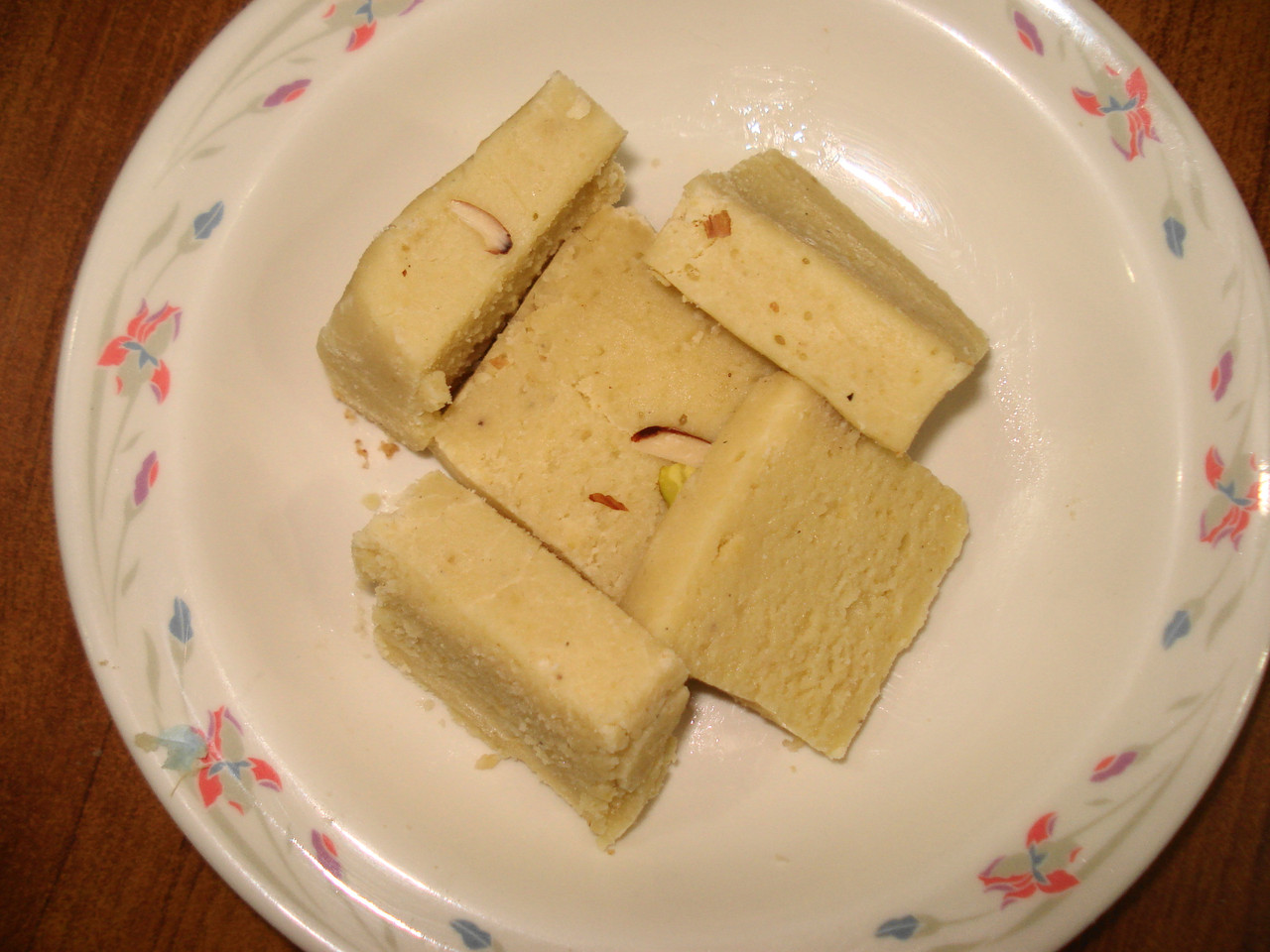 Melt-in-Mouth Barfi — Khoya, Badam, Pista & Fruit |
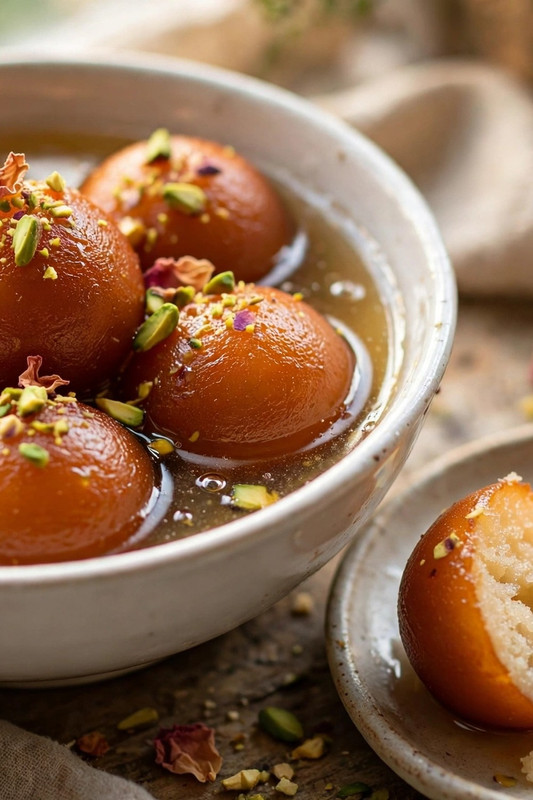 How to Make Soft Gulab Jamun at Home |
 Nan Khatai Recipe — Bakery-Style Almond Shortbread |
Coming Next on Baking With Kashf
Our latest Chatpata post — a funny bakery story from the counter, with real mithai facts and a little jugaar. Stay with us.
About the Author
I am Kashf — sharing the secret recipes of a branch of one of Pakistan's famous bakeries. Every recipe here is tested at our bakery counter and in my own kitchen.
Never Miss a Recipe
Get our free Mithai Rescue Chart and never miss a recipe from our bakery counter. Join free


Comments
Post a Comment