Gulab Jamun in Winter vs Summer: What Changes and Why
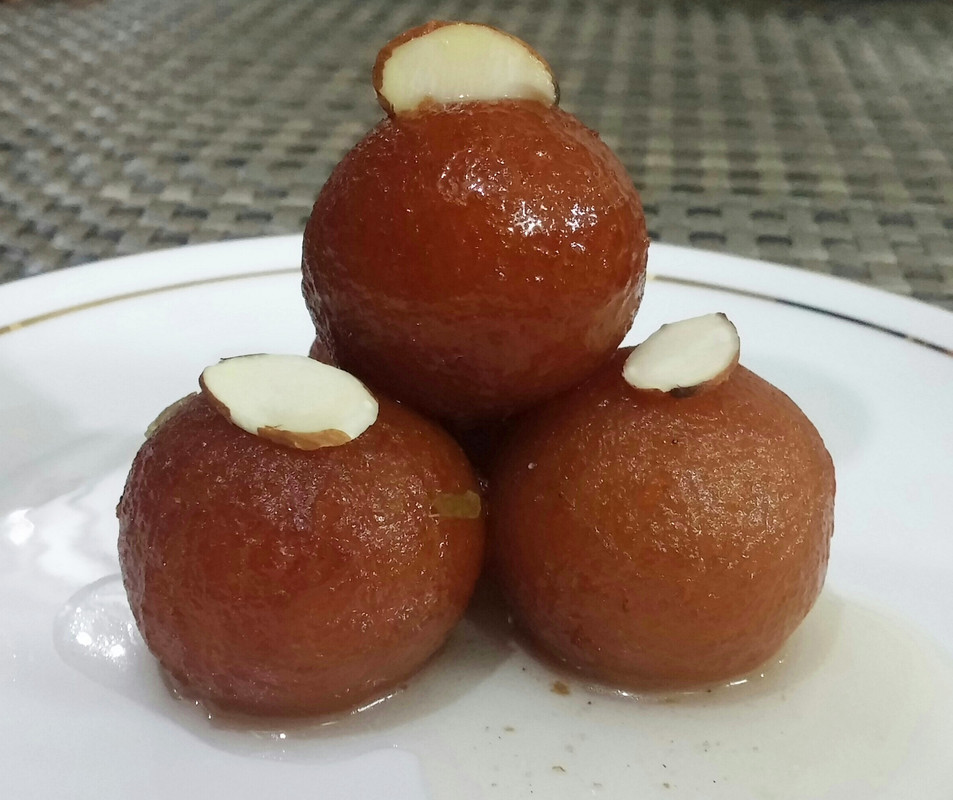
Photo: Golden gulab jamun in syrup, by jsn.2k11, via Wikimedia Commons (CC BY-SA 4.0).
Make the same gulab jamun recipe in January and again in July, and you will get two different sweets. In winter the jamuns come out soft and juicy. In summer the same recipe can turn out hard in the middle, or the dough goes sticky in your hands before you even roll it. Nothing in the recipe changed. The season changed. I am Kashf, and I work with jamun and rasgulla all year round, in every season. In this article I will explain what the season actually does to your recipe — and what to change, so the same recipe works in every month of the year.
The Sheera Is the First Thing the Season Touches
Every jamun problem starts in the sheera (sugar syrup). The syrup is not just sweet water — it is the thing the jamun drinks. And the syrup changes with the temperature of your kitchen. Sugar syrup thickens as it cools — every home cook who has made jamun knows this, and it is the first thing to remember in winter. In a cold kitchen the syrup cools fast, turns thick, and then it cannot soak into the jamun at all. The result is a jamun that looks right on the outside and stays dry and hard in the middle.
The fix is simple, and it is the same one the best home recipes agree on: keep the syrup warm, and make it a little thinner than you think. For jamun the syrup should be sticky, just before it forms a full thread — never a hard one-string syrup, and never thick like honey. If the syrup is too cold, the jamuns will not drink it up, and they stay dense in the centre. The rule is warm jamun into warm syrup: hot fried jamuns straight into warm — not boiling — syrup, then at least two to three hours of soaking, overnight if you can. That is how the syrup reaches the very centre.
In summer the sheera gives you the opposite problem. The syrup stays warm on its own, so the jamuns soak beautifully — but a tray of soaked jamuns left out in summer heat will not keep. Keep them in the fridge, in their syrup, and they stay good for three to six days. That is the range most home recipes agree on. The season decides the storage, not the recipe.
Winter's Gift — Khoya and Nolen Gur
Winter is the kind season for mithai, and the old sweet makers knew it. There is a lovely old practice behind gulab jamun: khoya used to be made in winter and kept for summer, and by then it had taken on a mild green colour and a grainy texture — the famous hariyali mawa — which was considered perfect for making gulab jamun. Winter makes the khoya; summer eats it. That is how the seasons used to work together.
Winter also brings its own rasgulla. In Bengal, gur rasgulla — chenna balls in jaggery syrup — is a winter sweet, made for Makar Sankranti, when the fresh date-palm jaggery (nolen gur) arrives. The same soft, spongy rasgulla, but the syrup is smoky and caramel-like instead of plain white sugar, and it only tastes right in the cold months. If you have ever wondered why some sweets only appear in winter, this is why: the season brings the ingredient, and the ingredient brings the sweet.
Summer's Problem — Sticky Dough
Summer's trouble starts before the frying, in the dough itself. In hot and humid weather the jamun dough turns sticky in your hands — the warmth of your palms and the damp air work against you. The fix the home cooks use is simple: rest the dough in the fridge for ten to fifteen minutes before you roll it. Cold dough rolls smooth, and smooth balls are the whole secret — a ball with even a tiny crack on it will split open in the oil.
That is the summer rule for jamun, and it is the same for rasgulla's chenna: knead it with the heel of your palm until it is smooth and free of lumps, roll it into small crack-free balls, and do not overwork it. The chenna rule does not change with the season. What changes is your kitchen — so in summer, work fast, keep the dough cool, and fry in small batches.
Rasgulla Plays by Different Rules
Rasgulla looks like jamun's cousin, but its syrup is a different thing altogether. Jamun soaks in a sticky sheera. Rasgulla boils in thin sugar water — about 200 g of sugar in a litre of water — and it must stay at a rolling boil, with the lid on, so the steam puffs the balls up to double their size. The syrup must stay thin and light, or the rasgullas cannot absorb it properly.
In winter that thin syrup cools and thickens faster between batches, and the fix is the simplest one in this article: splash in some hot water and bring it back to the boil. Keep the lid on, keep the flame steady, and give the balls room to puff — a crowded pot makes flat rasgullas in any season. And the same winter rule as jamun applies at the end: let them sit in the syrup for at least six hours before serving, so they drink their fill.
From Our Bakery Counter
At our bakery, the season changes the work before it changes the recipe. In hot weather, the biscuit makers keep the ghee tin packed in ice so the ghee firms up — firm ghee goes into some doughs in summer, because melted ghee in a hot kitchen makes a flat, dense biscuit with no cracks. That is the same instinct as chilling the jamun dough: cold fat, cold dough, steady hands.
And here is the counter rule I work by myself. At our bakery the whole game is the sheera: we shape the recipe so the sweet drinks the syrup in properly — that is the aim of every adjustment. In one of them we add a little extra sooji (semolina), which helps it hold together and soak the sheera evenly. And when a batch gives out more sheera than it should, we cut its material down a little — the weight drops slightly, but the sheera stays in balance, neither too much left over nor too little for the next batch.
The mixture itself changes with the season too. In summer, our jamun mixture rests on three things — starch, sooji (semolina) and dry milk — and the paneer decides how much of each goes in. One day the dry milk comes down a little, another day it is the starch or the sooji that is cut. The paneer tells us. In winter we use the full, proper material: for every 10 kilos of paneer, 1 kilo of sooji, 1 kilo of dry milk and 1 kilo of maida (plain flour). Even the maida is not fixed — some batches take it, some do not. Again, it is the quality of the paneer that decides.
Winter vs Summer — What Changes, and What to Do
One recipe, two seasons. Every line below comes from the home recipes and bakery practice in this article — nothing here is guessed.
| Winter | Summer | |
|---|---|---|
| Sheera | Thickens fast as it cools — keep it warm, and make it a little thinner than usual. | Stays warm on its own, so the jamuns soak well — but keep the tray in the fridge, in its syrup. |
| Mixture | Full, proper material: for every 10 kg of paneer, 1 kg sooji, 1 kg dry milk and 1 kg maida (the maida itself depends on the paneer’s quality). | Three main items — starch, sooji and dry milk — adjusted to the paneer: sometimes the dry milk comes down, sometimes the starch or the sooji. |
| Dough | Firm dough, easy to roll smooth — roll the balls with damp palms so no cracks form. | Turns sticky in heat and humidity — rest it in the fridge for 10 to 15 minutes before rolling. |
| Frying | Steady medium-low flame, 5 to 6 balls at a time — crowding drops the oil temperature. | The same slow fry — judge by the colour, not the clock; when the colour is right, they come out. |
| Serving | Serve warm — the syrup stays soft and the jamun is at its juiciest. | Serve chilled — firmer, refreshing, and the syrup holds. |
| Keeping | In the fridge, in syrup, for 3 to 6 days. | In the fridge, in syrup, for 3 to 6 days — keep them cold, not sitting out on the counter. |
Frequently Asked Questions
Why do my jamuns stay hard in winter?
Usually the syrup. In a cold kitchen the syrup thickens as it cools, and a thick or cold syrup cannot soak into the jamun. Keep the syrup warm, make it a little thinner than usual, and give the jamuns at least two to three hours to soak — overnight is best.
Should the syrup be hot or warm when the jamuns go in?
Warm, not boiling. Hot fried jamuns go into warm syrup — that is the combination that lets the syrup get drawn inside. If the syrup is boiling, the jamuns can harden; if it is cold, they stay dense in the middle.
Can I make rasgulla in summer?
Yes. The chenna rules do not change — fresh chenna, kneaded smooth with the heel of your palm, rolled into crack-free balls. Keep the thin sugar water at a rolling boil with the lid on, and if the syrup thickens, splash in some hot water.
How long do gulab jamuns keep?
In the fridge, in their syrup, for three to six days — that is the range most home recipes agree on. In summer, keep them in the fridge and do not leave the tray sitting out.
From Our Bakery to Your Kitchen
The season is not your enemy — it is just another ingredient, and once you know what it does, you can cook around it. Keep the sheera warm in winter, keep the dough cool in summer, and let the jamuns soak long enough in either season — just as our soft gulab jamun and our soft, spongy rasgulla show, step by step. And when winter comes, remember the old sweet makers: that is the season for khoya, for nolen gur, and for the slow sweets — like our sohan halwa, which takes hours of patient stirring. If you like keeping your recipes and notes in one place, the printable Recipe Journal is made for exactly that — one page per recipe, ready for the kitchen shelf.
More From Our Bakery Counter
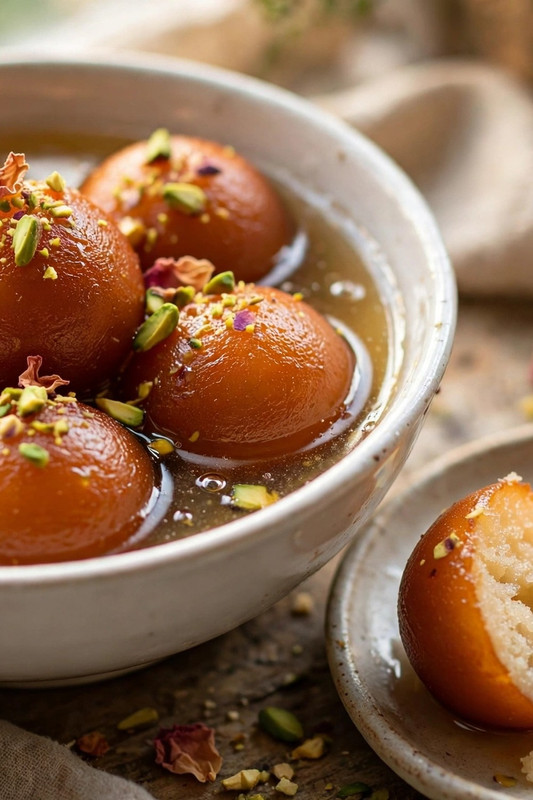


If you enjoyed this sweet from our counter, our recipes are waiting for you. Start with the soft gulab jamun — melt-in-the-mouth, made with milk powder and no khoya. Or try the soft, spongy rasgulla, with the bakery-style secret recipe. And for a slow winter sweet, our sohan halwa takes hours of patient stirring. See all my recipes on the Baking With Kashf homepage.
Coming Next on Baking With Kashf
On Friday, 20 November, a problem-and-fix post from our bakery counter — why your sponge smells of egg, and why it is not a fault at all. Stay with us.
About the Author
I am Kashf — sharing the secret recipes of a branch of one of Pakistan's famous bakeries. Every recipe here is tested at our bakery counter and in my own kitchen.
Never Miss a Recipe
Get our free Mithai Rescue Chart and never miss a recipe from our bakery counter. Join free


Comments
Post a Comment