The Secret Life of Bakery Leftovers: Choora, Cutlets and Very Happy Buffaloes
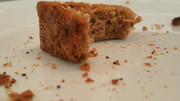
Photo: Bread crumbs, by Deavmi, via Wikimedia Commons.
Walk into any bakery at the end of the day and look at the floor under the biscuit trays. There it is — a small golden pile of broken biscuits and crumbs, swept into a corner. Most people would call it waste. At our bakery counter, we call it choora — and choora, as it turns out, has its own customers, its own uses, and its own little economy. Nothing in a bakery is truly wasted. This is the story of what happens to the crumbs, the leftovers and the sweet syrup nobody sees — told the way it really happens.
Watch: the crumbs nobody throws away
1. The Biscuit Choora — Broken Biscuits Have Somewhere to Go
When biscuits are made, some of them break. That is the nature of baking — a tray comes out of the oven, a biscuit cracks at the edge, a corner snaps off while it is being packed. The broken pieces and the crumbs that fall from them are the choora. It is not a mistake and it is not a failure; it is simply what a day of baking leaves behind.
And here is the part outsiders never guess: that choora is wanted. Some of it goes home with the bakery staff — a bag of crumbs for the house. And some of it is taken by people who come from outside, on purpose, because they keep chickens and pigeons. For their birds, biscuit crumbs are a treat — dry, sweet, full of energy — and the birds eat them happily. So the crumbs that fell from the tray end up feeding somebody's flock, and the bakery floor ends up clean. Everybody wins, including the pigeons.
There is a small honesty in this that I like. At home, a broken biscuit goes straight into the mouth — nobody minds a crack in a biscuit they are about to eat. In a bakery, a broken biscuit cannot go into the packet, because the customer paid for whole biscuits. But it is still good food. It is only the shape that broke, not the biscuit. So it finds its second job, and that second job is a real one.
2. Rusk Choora — The Crumbs That Make Cutlets Crunch
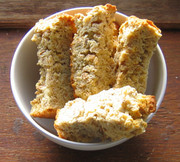
Photo: A bowl of rusks, by Anrie, via Wikimedia Commons.
But there is one kind of choora that people do not just accept — they ask for it specially. Rusk choora. Rusk is the twice-baked, bone-dry biscuit that goes with chai, and when rusk breaks, its crumbs are finer, drier and crunchier than ordinary biscuit crumbs. And those crumbs have a job that every desi kitchen knows: cutlets and shami kebabs.
Ask anyone who makes shami at home and they will tell you the same thing — the kebab needs something to hold it together and something to give it its bite. Rusk crumbs do both. Rolled in rusk crumbs, a cutlet fries up golden and crisp on the outside, and the crumbs drink in just enough moisture to keep the inside soft. Home cooks have known this for years: when the breadcrumbs run out, crushed rusk does the same job, and many will tell you it does it better.
And here is the part that made me smile when I found it: our rusk crumbs have a world-famous cousin. In England, crushed rusk is sold properly, in shops, under the name "butcher's rusk" — a dry biscuit broken into small pieces and sold to butchers, who mix it into sausages, burgers and stuffings as a binding agent. It holds the meat together, keeps it juicy, and carries the seasoning through the whole mix. So the crumbs from our rusk tray and the crumbs in an English butcher's shop are doing the very same job, on two sides of the world — one in a shami kebab, the other in a sausage. Choora, it turns out, is an international ingredient. It just never got the credit.
3. The Sheera and the Broken Sweets — Buffaloes Get the Best Deal
Then there is the sweet side of the leftovers. Mithai is cooked in sheera — sugar syrup — and that syrup has a working life. When it has been used and used again, when it is finally too tired to sweeten another batch, it is finished for the shop. And the rasgulla and gulab jamun that break and crumble into the syrup while they cook — they are finished too, for the shop.
But finished for the shop does not mean finished for everyone. This is the part I was told at the counter and never forgot: the used sheera and the broken sweets go to the animals. People who keep buffaloes and cows take them, because for a buffalo this is good feed — the sweetness is energy, and the milk shows it. The animals give good, plentiful milk, and the sweetness of that milk improves too. It is the same idea as molasses in animal feed, only ours comes straight from the mithai karahi.
So the syrup that sweetened a hundred kilos of mithai ends its working life sweetening a buffalo's milk. Nothing is thrown away. Nothing is wasted. The sweet just changes hands — from the sweet shop, to the animal shed, to the milk pail.
4. The Honest Line That Never Moves
Now, before anyone misunderstands the story — here is the line that never moves at our counter, and it is the most important part of this whole article. Cakes that come back from the shops after their date has passed are never, ever sold again to people. They are never re-packed, never re-decorated, never quietly put back on the shelf. They go to the scrap — the choora pile — and the scrap man takes them away, for the animals. That is the rule, and it does not bend.
I am telling you this plainly because honesty is the whole point of this blog. A bakery can be funny about its crumbs and proud of its jugaar, but it cannot be casual about what people eat. The day a bakery starts selling yesterday's cake as today's cake is the day it stops being a bakery worth trusting. Our crumbs feed chickens and buffaloes. Our cakes feed people — fresh ones, made that day. That is the deal, and it stays.
Where the leftovers go, at a glance:
| What is left over | Where it goes | Why it works |
|---|---|---|
| Biscuit choora (broken biscuits + crumbs) | Staff take it home; outsiders take it for chickens and pigeons | Dry, sweet, full of energy — good bird feed |
| Rusk choora (rusk crumbs / rusk powder) | Home cooks, for cutlets and shami kebabs | Binds the kebab and gives the golden crunch |
| Used sheera (spent sugar syrup) | Buffalo and cow keepers, as animal feed | Sweetness is energy — more milk, sweeter milk |
| Broken rasgulla / gulab jamun | With the sheera, to the animals | Same feed value; never back on the shop shelf |
| Returned / expired cakes | Scrap only — never resold to people | The honest line: fresh cakes for people, always |
| Butcher's rusk (England) | Butchers, into sausages and burgers | The same crumb idea — a binding agent, sold in shops |
The Honest Bakery Rule Behind the Laughs
There is a serious truth hiding inside all this fun, and it is the rule our bakery lives by. At home, nobody watches the cost — only the quality matters. In a bakery, cost is watched first, and quality is built around it. That is why a bakery keeps its crumbs and finds them a second job: every kilo that is used twice is a kilo that was not wasted. A good shortcut saves time and money. But it can change the taste a little, and an honest bakery says so plainly instead of pretending otherwise. The customer who knows the trade-off is the customer who comes back.
And that is really what choora is about. It is not about being cheap. It is about respect — respect for the flour, the sugar and the hands that made the thing in the first place. Throwing good food away is easy. Finding it a proper second use takes a little thought, and a little honesty about what it is and where it goes. Our bakery does the thinking. The chickens do the eating.
Myth vs Fact
Myth: "Choora is just waste — broken biscuits are good for nothing."
Fact: Broken biscuits are only broken in shape, not in food value. They feed chickens and pigeons, and rusk crumbs are specially wanted for cutlets and shami kebabs. Waste is a thing with no use left — choora still has three.
Myth: "Rusk crumbs are only for the birds."
Fact: Birds love them, but home cooks love them more. Crushed rusk binds a kebab and crisps its outside, and in England the same crushed rusk is sold in shops as "butcher's rusk" for sausages and burgers. It is a proper ingredient, not a leftover.
Myth: "Old sheera and broken sweets are just thrown away."
Fact: They go to the animals — and the animals pay it back. Buffalo keepers take used sheera and broken sweets because the sweetness is energy feed, and the milk comes back good, plentiful and sweeter.
Myth: "If a bakery is careful with its leftovers, it must be cutting corners on the food."
Fact: It is the opposite. A bakery that is careful with its leftovers is careful with everything — including the line that never moves: expired cakes are never sold to people again. Care with crumbs and care with customers are the same habit.
Save this recipe on Pinterest for later.
Frequently Asked Questions
What is choora, exactly?
Choora is the crumbs and broken pieces that come out while biscuits are being made — cracked biscuits, snapped corners, and the crumbs that fall from the trays. It is the same biscuit, only broken.
Can I use biscuit or rusk crumbs at home for cutlets?
Yes — that is exactly what home cooks do. Crush dry rusk (or plain dry biscuits) into fine crumbs and roll your cutlets or shami kebabs in them before frying. They bind the kebab and fry up golden and crisp. Rusk crumbs work best because they are drier and crunchier.
Is rusk powder the same as breadcrumbs?
Close cousins, not twins. Both are dried crumbs used for coating and binding, but rusk is twice-baked and yeast-free, so it stays drier and crisper, and it does not ferment in a mix. For cutlets either works; for a sausage or a kebab mix, rusk is the steadier choice — which is why butchers buy it by the bag.
Do animals really eat sheera and broken sweets?
Yes — buffalo and cow keepers take used sheera and broken mithai as feed. The sugar is energy, and keepers report good, plentiful milk with better sweetness. It is the same idea as molasses in animal feed, from our own mithai karahi.
So nothing in a bakery is ever wasted?
Almost nothing. The crumbs feed the birds, the rusk crumbs fry the cutlets, the sheera feeds the buffaloes. The only thing that is ever truly thrown away is the one thing that must never be sold again — a cake past its date. That is not waste. That is honesty.
More From Our Bakery Counter
If you enjoyed this peek behind the counter, our recipes are waiting for you. Start with the Pista Sweet — soft coconut-khoya squares with a chocolate border, our winter sweet. Or try the Sohan Halwa, Dera soft vs Multani hard, made at home in a 2-litre batch. And for a crumbly tea-time bite, our Nan Khatai is the bakery's own almond shortbread. See all our recipes on the Baking With Kashf homepage.
Coming Next on Baking With Kashf
On Monday, 30 November, a new recipe from our bakery counter — the simple sponge cake, made the way we make it at the bakery, with the egg-smell fixes from our counter built right in. Stay with us.
About the Author
I am Kashf — sharing the secret recipes of a branch of one of Pakistan's famous bakeries. Every recipe here is tested at our bakery counter and in my own kitchen.
Never Miss a Recipe
Get our free Mithai Rescue Chart and never miss a recipe from our bakery counter. Join free
At the bakery counter — where even the crumbs have a story.


Comments
Post a Comment